So, I have been working on improving my video techniques, so hopefully this one is a little better than the previous video 🙂
Nevertheless, what I am trying to show is the fidelity of the HFS Cockpit systems and how beautifully they interact with the DCS World Spitfire Mk.IX. Here in the following video I demonstrate the start-up procedure for the Spit. It’s a little rough, I really need to work with a checklist off a kneeboard until I become really adept at the process and checks required. It’s enough to get the engine going however.
The Intro photos are from the Wally Brunton collection of the South African Air Force No.4 Squadron in Italy, 1945. Maj. M.V. ‘Wally’ Brunton was the OC. No.4 Squadron, Italy, 1945.
This year is the SAAF’s 100th anniversary!
Dedicated to all those brave South Africans who gave their all in the fight against tyranny. As you can see from the photos they came from all walks of life in South Africa. We shall remember them…
We are extremely pleased to be able to share with you a demonstration of the HFS Spitfire Mk.IX Simulator in action. In this video you will see a short mission in DCS World using the lates WWII Normandy scenery. We hope you have as much fun watching it as we did making it!
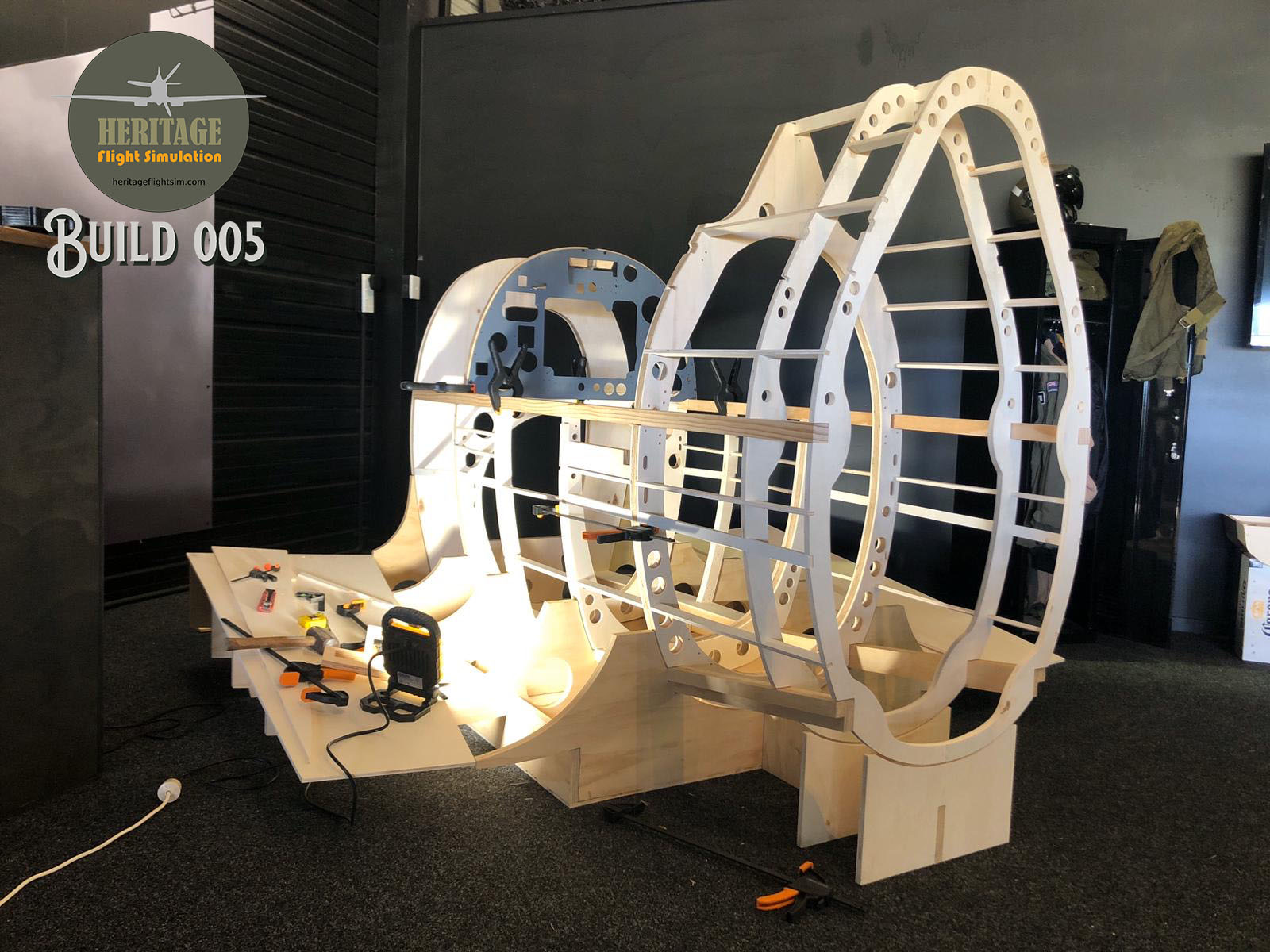
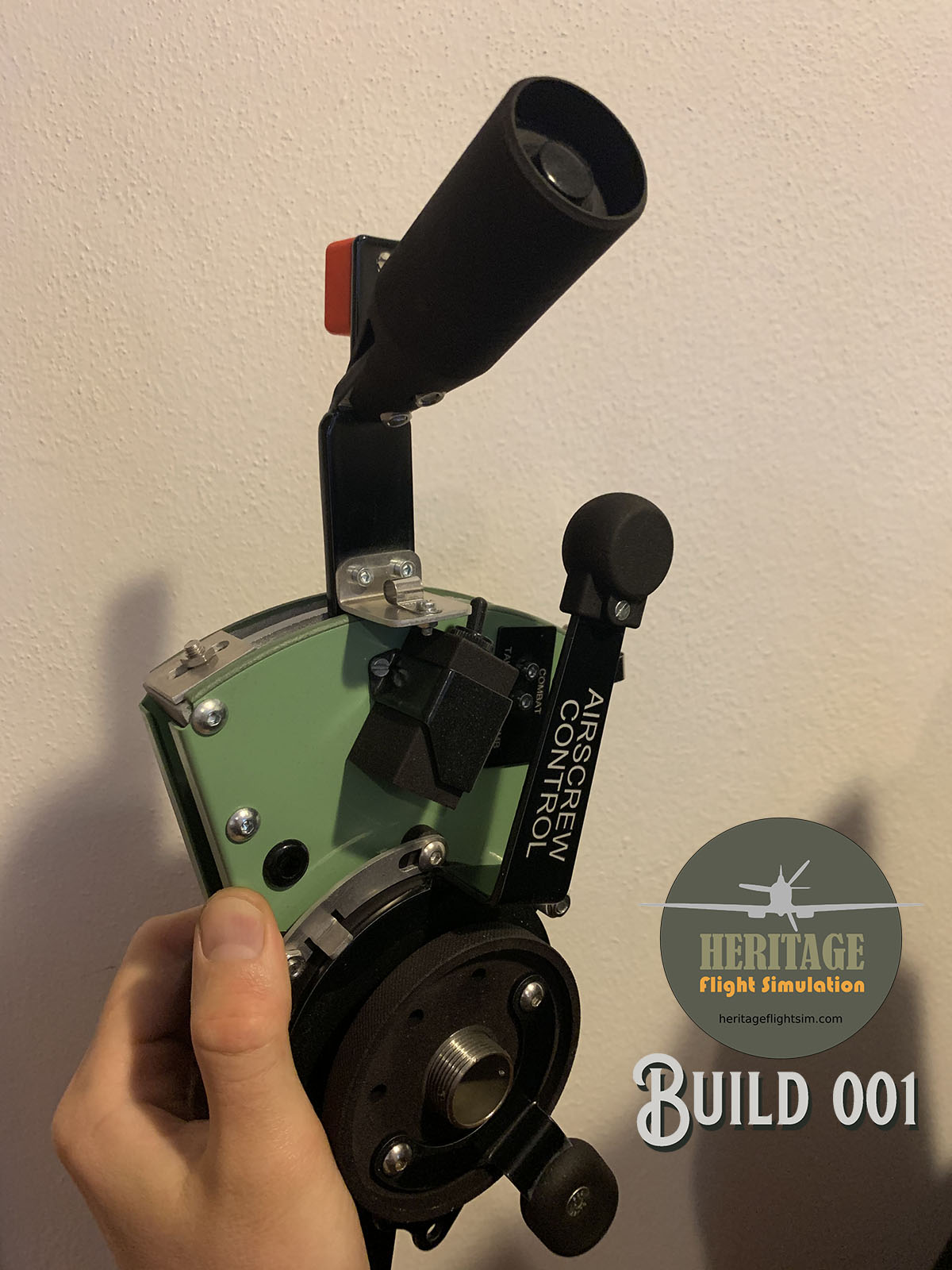
I have received a few pictures from two of our HFS Spitfire MkIX builders. I think you will agree their work looks stunning! Their build quality is beautiful, truly pieces of art. I am quite humbled by what they are shaping from the HFS plans.
Having others do the build has also provided hugely valuable feedback, resulting in improvement of the product overall. Thus we are now at Rev1.4 which incorporates additional drawings, improvements and corrections for points I had missed.
Also most gratifying have been the compliments I have received from the builders.
“As it comes together, I am loving it, love how big it is, how well designed it is. It really becomes very solid.”
“I am honestly so impressed with how everything is fitting together, you need to be very proud of what you have done Roel.”
“Did I tell you that the Shapeways parts have arrived and are stunning.”
“I am so impressed with the speed you provided me the files and your enthusiasm for details.”
“I got 1 set of 3D printed parts from SHAPEWAYS to day, It looks very good and top Quality”
I hope to be sharing many more of their pictures as their builds progress. Without further ado, here they are 🙂
We have had significant interest in the project and 9 Build Licences have been issued to date. Feedback from the purchasers has been overwhelmingly positive. The questions we receive are extremely valuable in refining the product and enhancing the ease of build.
Expansion of service
As a result of demand we will be making available kits for the aluminium and mild steel laser cut, engraved, profiled and machined components. This in addition to the plastic thermo moulded components and canopy currently available. Pricing will be published soon.
Relocation to Ireland
We can also announce that we are relocating to Ireland and should be ready to serve our customers from there from July onward. This naturally has tremendous benefits to our clients in the UK and EU where providing wood routed kits in addition to the above also becomes viable. Shipping of complete simulator builds and servicing of those units now becomes easy. The distance to North America is also significantly reduced. We are working with an Ohio based engineering and machine shop, who is also a build license holder, to set up a supply service for the Americas.
Completion of cabling on Prototype
The period since we issued the Build Licence and Plan set in November of last year has been pretty busy, with little time to sit and update the blog. Just catching our breaths now to reflect on what we’ve done. Because of the pressure to complete the prototype for exhibition at Aero SA in July of last year, a decision was made to complete the build without the cabling and to retrofit this after the show. That then had to wait while the Build Manual was being completed. So in December we pulled the controls apart again and did the cabling up.
Wiring up the Morse Code Unit
Starboard side wiring in progress
Cabling in place
The cabling process was interesting and very satisfying. It curiously brought the cockpit to life. Almost like laying the veins in place and changing it from a mere object to something with soul.. I wasn’t the only one that felt like this, receiving the same comment from others.
Getting into the heart of the matter – The Controllers!
This month we expanded the design to include an improved Instrument Shelf and have started doing the wiring from the connector blocks up to the controllers.
New design instrument Shelf
Wiring staring to come through!
Easy access to Instrument Shelf
There are two sets of controllers, one for DCS World using DCS-BIOS and the other for X-Plane 11 using VatSim. Both systems share a joystick controller. I am testing a Teensy++2 for this task before going to a Leo Bodnar card. The potential advantage of the latter is that it is said to have built in signal filtering and it has individual connectors for earth and 5V. We will let you know how that pans out.
The joystick function is used for the primary flight axis. For these the response time for the Arduino’s would be insufficient. Hence the shared functionality. We couple it in this case to the elevator, rudder, aileron and wheel brakes. The Arduino’s are fine for all the other functions as their sensitivity is not critical.
For X-Plane 11 we use one Arduino Mega, two 16 channel multiplexer cards and the shared joystick card, controlled by SimVim. There are many other controller programs out there, and SimVim is for non-commercial use only. But you can use programs such as Air Manager commercially.
Starting connections to the 16 Channel Multiplexer
DCS-BIOS uses two Arduino Mega’s in conjunction with the joystick card.
For IL2 use you would only need the Leo Bodnar Joystick card as you are setting up the simulator as a giant joystick interface.
We cannot wait to finish this phase and start flying!
We are pleased to announce that the Heritage Flight Simulation Shapeways Shop is up and running. Here you can purchase all the 203 components for inclusion in your HFS Spitfire Mk.IX Cockpit Simulator build. The total price of the components comes to US$3945.
They are printed in white SLS Nylon. We have found we can get a better result using acrylic model paints as opposed to the (expensive) Shapeways die colouring method.
Well, its finally released! Two and a half years years of blood sweat and toil have resulted in a magnificent result! You can get it from the link below..
To those that have purchased the Throttle Quadrant Plan Set already, your vouchers are on the way!
As we are approaching my self imposed deadline of October pretty rapidly I thought it’s only fair to let you know where we are and what the current outlook is.
The Build Manual is progressing beautifully. We are up to Page 291 and working diligently through the build process. Since the last report we have added the detail on how to cover the fuselage frames, the door design has been significantly improved, the instrument panel assembly described, the seat construction made more robust, the canopy construction detailed, the rudder assembly, control column and elevator control assembly detailed and wonderfully illustrated.
Right now we are incorporating major simplifications to the Force Feedback design of the Rudder and Aileron assemblies. This without sacrificing any accuracy of in-flight representation. We have managed to build the full system into the fuselage rather than having it spill into the support cradle. This makes construction much easier and removal of the fuselage from the cradle very simple and fast.
So when will we publish? Well there are still all the auxiliary controls to describe. These are the components that run along the inside walls of the cockpit and below the instrument panel. Then there’s still a description of the cabling and electronics and the commissioning process and setups for DSC World, X-Plane and IL2. And then proof reading and cross-referencing all referred to drawings, cutting patterns, bend diagrams, machine drawings and general arrangements. What that means is that I will miss my target of October but it also provides me with great confidence that we will be ready to publish during November.
So in the meantime, herewith a few extracts from the manual for your viewing pleasure….
Preparation of the Build Manual is progressing well and we are up to page 124 and completed the detailing of the Fuselage Frame build.
Various design mods have been incorporated thus far, including the beefing up and improvement of the elevator and rudder trim systems and the canopy slider mechanism.
We are still on target for publication by end October, but again, design and documentation quality will trump over self-imposed deadlines… 🙂
To provide you with an idea of the content please find a few pages herewith.
Just a short post to let you know that we are back in the office and have started compiling the Build Manual. With the previously published Throttle Quadrant numbering over 70 pages, this promises to be a document extending over various volumes. All the experience gained during the prototype build will be incorporated. There will also be a few design improvements most of which have been completed.
This is an extract from the Table of Contents:
Our target is to publish the manual and place the simulator for sale during October, but let’s see how that goes. As always, the required level of quality will remain the most important consideration rather than time to market.
It’s been an exciting month. First the Aero South Africa Exhibition, then the UK visits and airshows, Ontario Canada, Oshkosh and finally the American Northwest. In between I was able to recharge my batteries in Bonneville, Alberta visiting my daughter. After a 1500km dash into the Washington and Oregon states, I am finally on my way home to complete the task of compiling the Spitfire MkIX Build Manual and Plan Set.
FHCAM Spitfire
Washington State, and in particular Paine Field in Everett, turned out to be amazing. Not only is it home to Paul Allen’s Flying Heritage and Combat Armor Museum, it also hosts the Historic Flight Foundation and the Seattle Museum of Flight Restoration Centre. And if you’re still looking for something to do after all that you can always go tour the gargantuan Boeing assembly facility at the same field!
These were all very worthwhile visits. The FHCAM contains a huge collection of mostly flying WWII aircraft, including a Spitfire and a Stuka Dive-bomber that is being restored.
HFF Spitfire
The Historic Flight Foundation also have a Spitfire and were having a mini airshow when I visited. They had a Bearcat and Avenger up in the air. I was able to have a chat with one of the pilots after the show and introduce the HFS Spitfire simulator to him. He expressed interest and was going to pass on the flyer I gave him to the owner of the collection. So hopefully I will hear from them at some point in the future.
Tillamook in Oregon had a different sort of surprise. During WWII the USA built some 10 bases with massive wooden hangars to house their convoy escort airships. One of the two original hangars at Tillamook still exists, the other having burnt down. It contains an eclectic assortment if aircraft, the star of the show though is the hangar itself.
Tillamook Naval Airstation Hangar
My final call was at the Evergreen Aviation Museum which now houses the aircraft with the longest wingspan ever built – the Spruce Goose. Ironically it is actually built of mainly White Birch, but then that doesn’t rhyme very well 🙂
Howard Hughes’ Spruce Goose
The unique aircraft is immense and was certainly worth the visit.